Still Early, Already Hopefully
A season-in-progress report from the raised beds
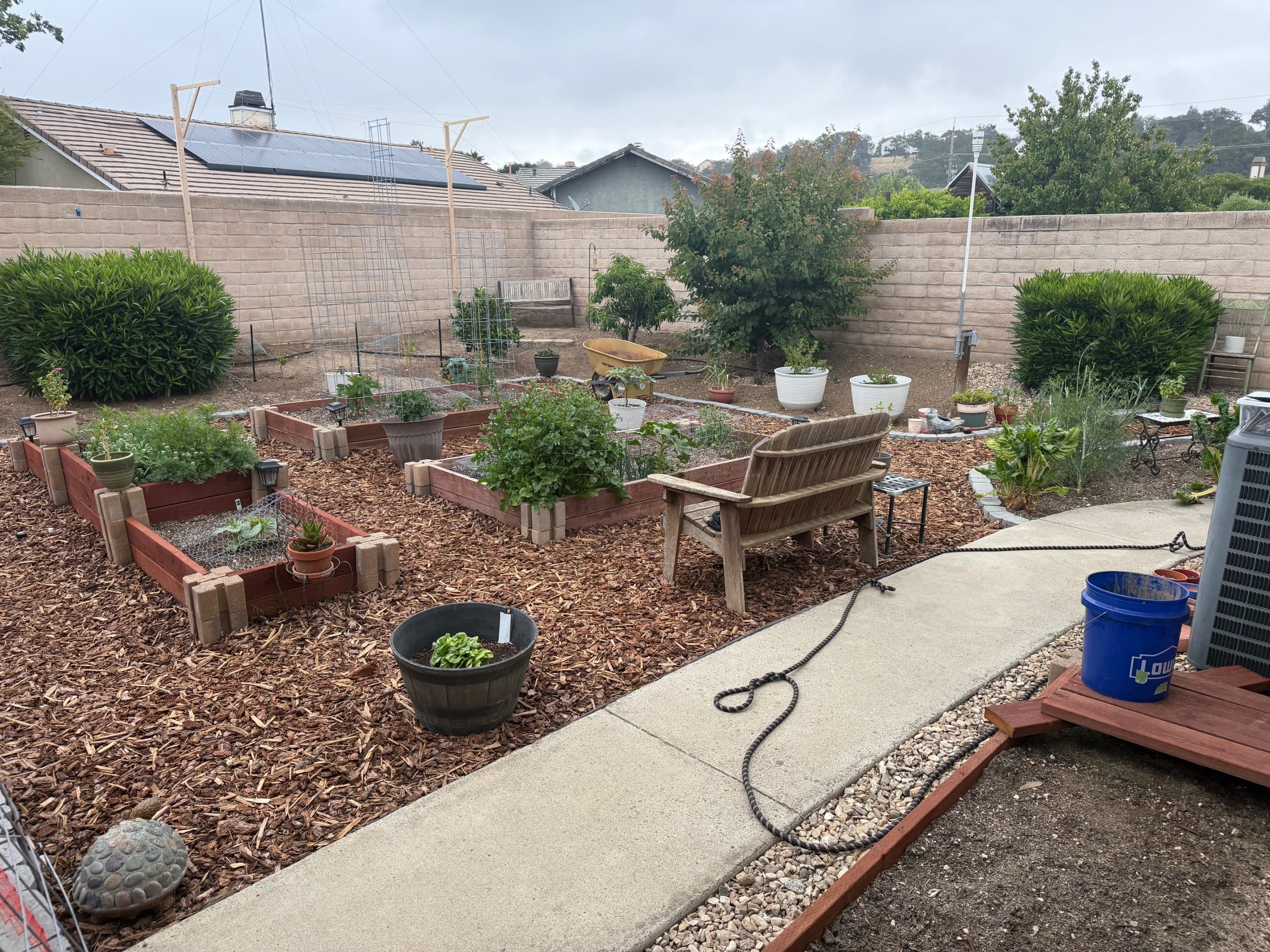
It’s nearly the end of May and we’re only just finding our footing. That might sound discouraging, but for those of us gardening in USDA Zone 9A — specifically in Paso Robles, California — the calendar reads differently than it does elsewhere. Our growing season can stretch deep into autumn, all the way through November. I still remember pulling tomatoes off the vine just days before December arrived last year. Had I been more attentive that year, who knows how much longer the harvest might have lasted.
This is a season of lessons learned and small victories claimed. Here’s where things stand.
256 seeds and a lesson in patience
I started the season ambitiously: 256 seedlings germinated indoors in mid-January. In hindsight, February would have been the smarter call. Several seedlings grew faster than expected, quickly outgrowing their plastic cells before conditions outside were ready for them. Not every seed sprouted, and some vegetables simply didn’t want to cooperate indoors — carrots, beans, lettuce, broccoli, cauliflower, leeks, cucumbers, and zucchini all either failed to germinate well or suffered transplant shock when moved outside. Some of these are crops that prefer to be sown directly into the ground after the last frost. A reminder filed away for next year.
The winners: peppers, tomatoes, and herbs
Where we stumbled with direct-sow crops, we thrived with nightshades and herbs. Four pepper varieties — jalapeño, sweet banana, sweet rainbow, and green — have all come in strong. Two tomato varieties are looking excellent: the meaty San Marzano and the striking Cherokee Purple. In the herb garden, thyme, dill, basil, cilantro, and parsley have flourished beyond expectation.
“I already see the savings at the grocery store — not having to buy the herbs I reach for every time I cook.”
The standout crop so far, though, is rocket — arugula. Four plants placed in a single raised bed have delivered what feels like an unlimited supply of leaves, with that fresh peppery bite that makes a salad feel alive. It’s become a fixture at our table.
Blueberries: a waiting game
The blueberries have been the season’s biggest disappointment, though not for lack of effort. I picked up two companion plants from Lowe’s earlier this year, and the plants themselves look healthy and are growing well. The problem is soil chemistry. Blueberries demand an acidic environment — ideally a pH between 5.5 and 6.0 — and ours isn’t there yet. I’ve been adding soil amendments to nudge the acidity in the right direction, but this is a slow process. There won’t be any berries this year, and I’ve made peace with that. The investment is for future seasons.
Hops, grapes, and the long game
A few more experimental additions deserve mention. I’ve planted three hop varieties — Cascade, Chinook, and Nugget — not for homebrewing, but to attract pollinators to the garden. Hops are a slow investment: vines typically take two to three years before producing. Of the three, Cascade has been the standout; one rhizome has produced four strong vines, all of which I’m letting grow out fully this first year. Chinook is alive but struggling to latch onto the vertical trellis support. Nugget, unfortunately, appears to be nearly dead, cause unknown. I’ve already ordered two more Cascade rhizomes to replace it, and depending on how Chinook fares, I may add a fourth to the trellis as well.
On a more indulgent note, I’ve also planted two grape varietals — Terret Noir and Picardan — sourced from Tablas Creek, one of my wine club memberships. It felt like a fun way to bring a little of what I love about Paso Robles wine country into our own backyard.
The heart of the garden: tomatoes
As in past years, the tomatoes are the emotional center of the garden. I’ve given them the best start I can — just two plants in a 4×8 raised bed, each surrounded by heavy-duty square metal cages to support what I’m hoping will be a serious haul. We’ve also added a cherry tomato in a pot and — the one I’m most excited about — a tomatillo plant.
Homegrown tomatillos. Fresh salsa verde. I’m already thinking about it.
Looking ahead
With arugula, Swiss chard, and dill already producing, the season is off to a genuinely promising start. If those early returns are any indication of what’s to come from the peppers, tomatoes, and herbs, summer is going to be abundant. I may need to dust off the canning equipment sooner than I expected.
The garden teaches patience every year. This one is no different — but so far, it’s teaching hope too.


